
Acne scars can affect skin texture, tone, and confidence long after breakouts are gone. The good news is that modern dermatology offers several effective treatments that help reduce the appearance of acne scars and improve overall skin quality. The best treatment depends on the type and severity of the scars.
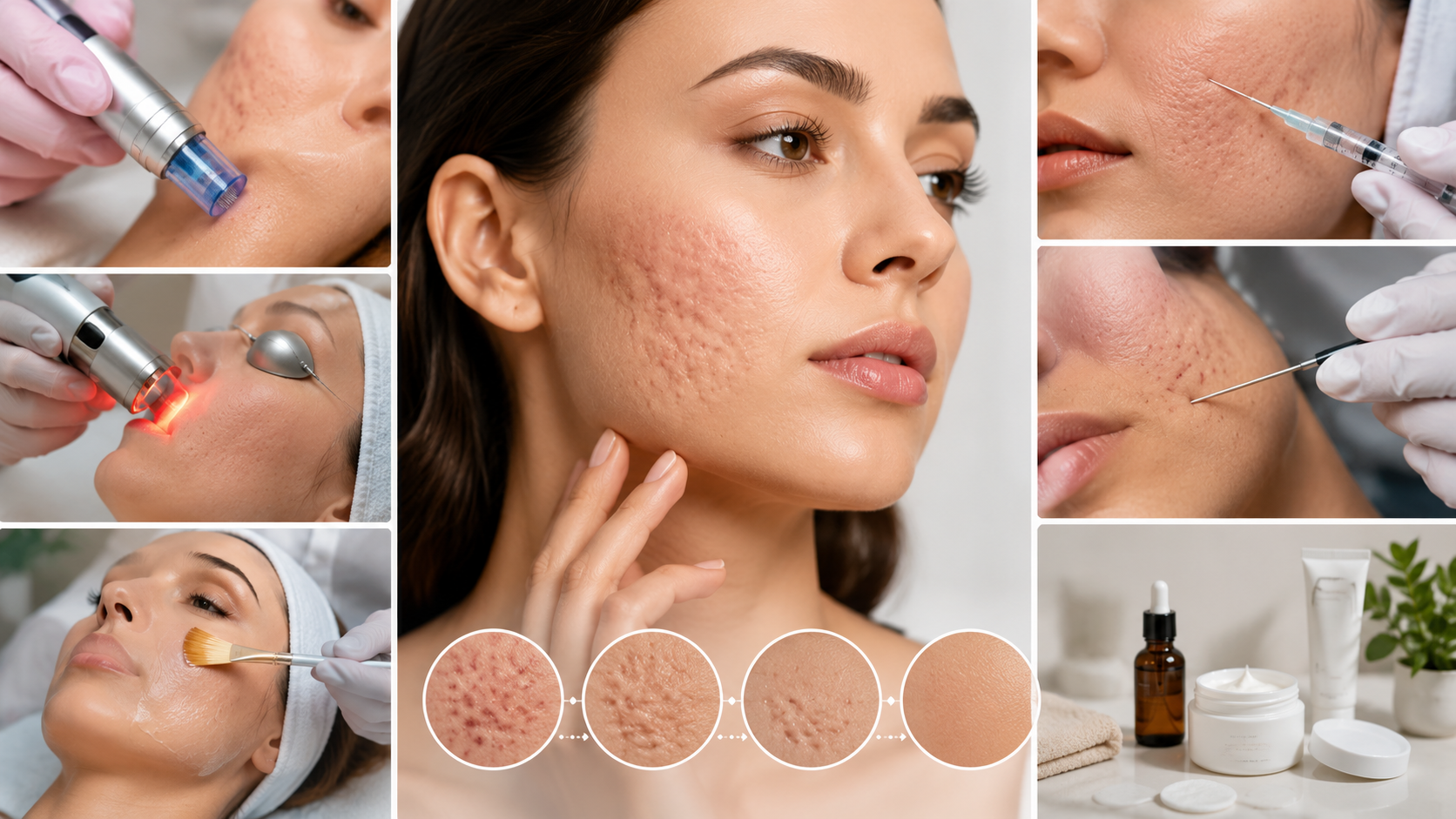
One of the most popular options is microneedling. This treatment uses tiny needles to create controlled micro-injuries in the skin, stimulating collagen production. It is especially helpful for mild to moderate atrophic scars and improves skin texture over time.
Laser treatments are another effective solution. Fractional lasers help resurface the skin and encourage collagen remodeling, making scars appear smoother and less visible. Different lasers are used depending on skin type and scar depth, so professional consultation is important.
For deeper acne scars, chemical peels can help remove damaged outer layers of skin and promote new cell growth. Superficial peels improve pigmentation and minor texture issues, while stronger peels target deeper scars.
Dermal fillers are commonly used for depressed or pitted scars. Fillers add volume beneath the skin, making scars look more even instantly. However, results are temporary and may require maintenance sessions.
Another advanced option is subcision, a procedure where a dermatologist releases the fibrous bands pulling the scar downward. This treatment works well for rolling acne scars and is often combined with fillers or microneedling.
Along with professional treatments, maintaining a healthy skincare routine is essential. Using sunscreen daily, avoiding harsh scrubs, and keeping the skin hydrated can support healing and prevent scars from becoming more noticeable.
Since every skin type is different, consulting a qualified dermatologist helps determine the safest and most effective treatment plan for long-term results.
Learn more: https://dermaklon.com/