
When it comes to professional skin treatments, chemical peels and laser resurfacing are two of the most popular options. But which one is better? The answer depends on your skin concerns, goals, and downtime tolerance.
What Are Chemical Peels?
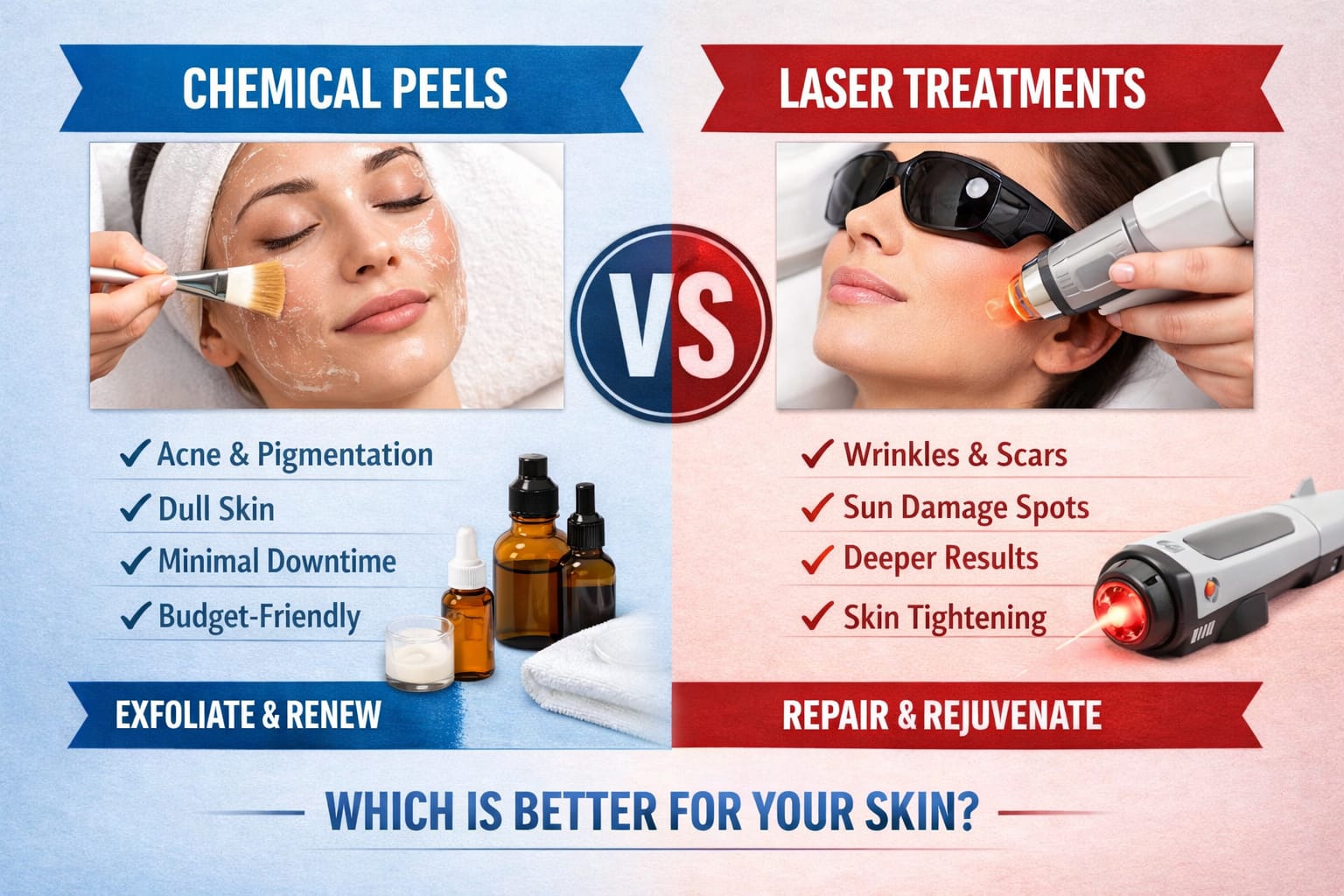
Chemical peels use medical-grade acids to exfoliate the top layer of skin. They help improve acne, pigmentation, dullness, and uneven texture. Light peels require minimal downtime, while medium to deep peels target deeper concerns like acne scars and fine lines.
Best for:
- Acne and acne marks
- Mild pigmentation
- Dull skin
- Uneven skin tone
Chemical peels are generally more affordable and suitable for beginners looking for gradual improvement.
What Is Laser Treatment?
Laser treatments use focused light energy to target specific skin concerns. Different lasers work at different depths to treat pigmentation, deep scars, wrinkles, and sun damage. Lasers stimulate collagen production, leading to firmer and smoother skin over time.
Best for:
- Deep acne scars
- Stubborn pigmentation
- Wrinkles and fine lines
- Skin tightening
Laser treatments usually offer faster and more dramatic results but may involve more downtime and higher cost.
Chemical Peels vs Laser: Key Differences
- Downtime: Peels (minimal to moderate), Laser (moderate to higher).
- Cost: Peels are more budget-friendly.
- Results: Laser gives deeper, long-lasting results.
- Skin Type Suitability: Peels are safer for sensitive and darker skin types (when done correctly).
Which Is Better?
There is no one-size-fits-all answer. If you want mild improvement with minimal downtime, chemical peels are a great choice. If you need deeper correction for scars, wrinkles, or pigmentation, laser treatment may be better.
Consult a qualified skin professional to determine the right treatment based on your skin type and concerns.
Read more: